
Choosing right career in healthcare is very important for your future. Healthcare has many options, like doctors, nurses, lab technicians, and administrators. By knowing how to choose right career in healthcare, you can find a job that suits your skills and interests.
Healthcare jobs are not just about earning money, they also give a chance to help people and make a difference. When you pick the right career, work becomes meaningful and rewarding.
This guide will help you understand your options, explore different roles, and make smart choices to build a successful and satisfying healthcare career.

Understand Yourself to Choose Right Career in Healthcare
Assess Your Skills and Interests
The first step to choose right career in healthcare is knowing yourself. Ask questions like:
- Do I like working directly with patients or managing technology?
- Do I enjoy helping people directly or working behind the scenes?
Writing down your skills and interests can clarify which roles suit you. Career quizzes or assessments are also helpful tools.
Consider Your Lifestyle
Some healthcare jobs need long shifts or night work. Others follow regular office hours. Choosing a career that fits your lifestyle helps you stay happy and motivated.
Tips for Self-Reflection
- Identify tasks you enjoy the most.
- Recognize your strongest skills.
- Decide if you prefer busy or calm work environments.
Explore Healthcare Career Paths
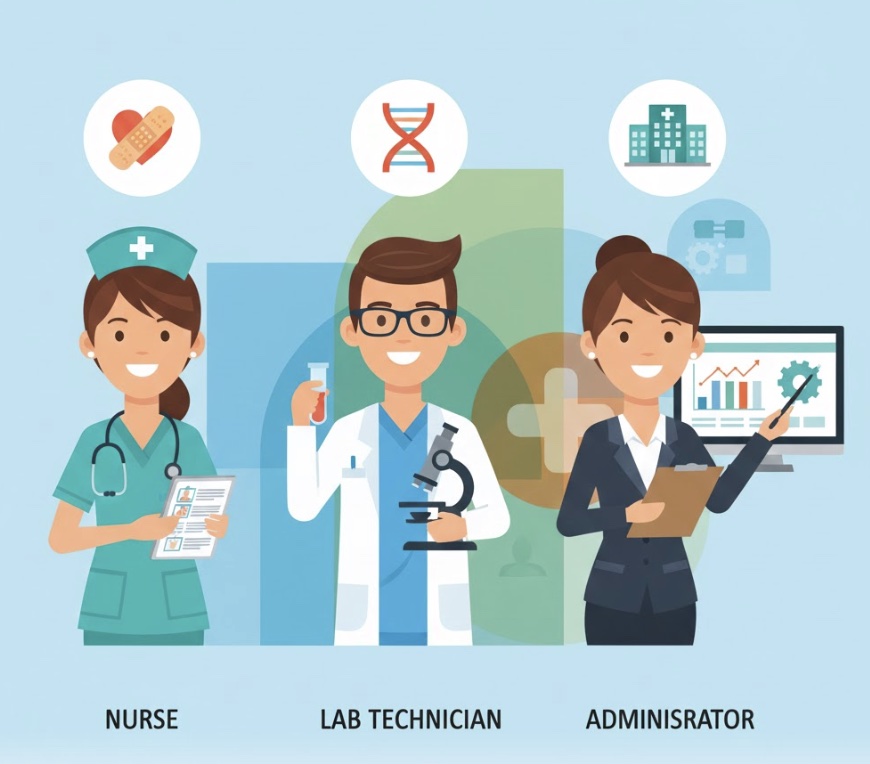
Healthcare has many paths beyond doctors and nurses. There are clinical roles, technical roles, and administrative roles. Knowing all options helps you choose right career in healthcare that fits your interests.
Clinical careers include doctors, nurses, and therapists. Technical careers include lab technicians, radiologists, and medical IT specialists. Administrative roles include hospital managers, billing specialists, and coordinators.
Table: Healthcare Career Options Comparison
| Career Type | Examples | Education Needed | Work Environment | Key Skills |
|---|---|---|---|---|
| Clinical | Doctor, Nurse, Therapist | Degree + License | Hospital, Clinic | Patient care, teamwork |
| Technical | Lab Tech, Radiologist | Diploma/Degree + Cert | Lab, Hospital | Technical skills, accuracy |
| Administrative | Manager, Billing Specialist | Diploma/Degree | Office, Hospital | Organization, leadership |
Education and Training Requirements
Each healthcare career requires different education. Some need long degrees, while others require short diplomas or certifications. Understanding requirements helps you plan your career path.
Licensing and certifications are often mandatory, especially for doctors, nurses, and therapists. Make sure to check your local regulations before starting.
Additionally, some careers allow specialization, advanced training, or leadership roles. This ensures long-term growth and helps you choose right career in healthcare wisely.
Gain Experience Through Volunteering or Internships
Experience is very important. Volunteering in hospitals or clinics lets you see real work. You learn about patient care, teamwork, and daily challenges.
Internships are another way to gain practical skills. They help you understand what you enjoy and which career suits you.
This hands-on experience also makes you more confident when applying for jobs or choosing education programs. You can volunteer in hospitals, join internship programs, and observe professionals in different roles to make the best choice and choose right career in healthcare.

Seek Guidance from Mentors
Mentors are experienced professionals who can guide you. They explain the day-to-day tasks, challenges, and growth opportunities.
Talking to mentors helps you avoid mistakes and make informed choices. They can also give advice on training, certifications, and career paths.
Find mentors through schools, hospitals, online networks, or professional associations. Regular guidance can help you confidently choose right career in healthcare.

Evaluate Job Opportunities and Growth
Not all healthcare careers have the same demand. Some roles are growing fast, while others have limited openings. Research the job market.
Check salary, benefits, and promotion opportunities. A career with growth potential ensures long-term stability.
Also, consider regional demand. Some healthcare jobs are in high demand everywhere, while others may be location-specific. Careful research helps you choose right career in healthcare with confidence.
Reflect on Work-Life Balance
Healthcare jobs can be demanding. Nurses and doctors may have long shifts, while some technical or administrative roles have fixed hours.
To maintain balance:
- Choose a role that fits your lifestyle and personal commitments.
- Understand shift patterns and job demands.
- Set boundaries and practice self-care to avoid burnout.
- Consider part-time or flexible work if possible.
A balanced career is satisfying and sustainable. Always consider personal life alongside professional growth when you choose right career in healthcare.
Conclusion
Making the decision to choose right career in healthcare requires self-reflection, research, mentorship, and hands-on experience. Use your strengths and interests to guide your choice.
Research careers, education requirements, and growth opportunities. Talk to mentors and gain practical experience through volunteering or internships.
By carefully planning and evaluating options, you can confidently choose right career in healthcare that is rewarding, fulfilling, and sustainable for the long term.
Frequently Asked Questions (FAQ)
Q1: What is the best way to choose a healthcare career?
A: The best way to choose right career in healthcare is to:
- Understand your interests and strengths.
- Explore different healthcare roles through research or shadowing professionals.
- Gain practical experience through volunteering or internships.
- Consider your lifestyle, work preferences, and long-term goals.
By combining these steps, you can make a career choice that is both fulfilling and sustainable.
Q2: How do I know which healthcare job suits me?
A: Ask yourself questions like:
- Do I want to work directly with patients or behind the scenes?
- Am I comfortable in stressful situations?
- Do I enjoy long-term relationships or solving quick problems?
- Am I good at science and memorizing information?
- Can I handle seeing blood, illness, or emotional situations?
You can also volunteer or shadow different roles. Pay attention to how you feel—if you feel excited, it’s a good fit; if you feel drained, it may not be the right role.
Q3: What education do I need to work in healthcare?
A: Education depends on the career:
- Clinical careers (doctors, nurses, therapists) usually require a degree and a license.
- Technical careers (lab technicians, radiologists) may need a diploma or degree with certifications.
- Administrative roles (hospital managers, billing specialists) often require a diploma or degree in healthcare management.
Always check local regulations and certification requirements before starting.
Q4: Can I switch to a different healthcare career later?
A: Yes! Switching is possible because many skills—like patient care, communication, and administrative knowledge—are transferable.
- You may need additional education or certification for the new role.
- Volunteering or shadowing in the new field helps you understand responsibilities before committing.
Q5: How important is volunteering for choosing a healthcare career?
A: Volunteering is very important because it helps you:
- Gain real-world experience and see what different roles involve.
- Build confidence and professional skills.
- Network with healthcare professionals who can guide you.
Volunteering gives a clearer picture of daily responsibilities and helps you make informed career choices.
Q6: What are the highest-paying healthcare careers?
A: Some of the highest-paying careers include:
- Doctors (specialists like surgeons or anesthesiologists)
- Pharmacists
- Nurse Practitioners
- Medical and Health Services Managers
- Radiologists and other technical specialists
Salaries vary by country, experience, and specialization, so research your local market.
Q7: How can mentorship help me choose the right healthcare career?
A: Mentorship provides guidance, experience, and advice:
- Mentors explain daily job tasks and challenges.
- They help you identify the skills and education needed for success.
- Mentors offer career growth advice and networking opportunities.
Having a mentor makes it easier to make informed and confident decisions.
Q8: What skills are needed for a successful healthcare career?
A: Key skills include:
- Strong communication and teamwork
- Empathy and patient care
- Critical thinking and problem-solving
- Attention to detail and accuracy
- Time management and organization
Some roles may also require technical or administrative skills specific to the job.
Q9: How do I balance work-life in healthcare jobs?
A: To maintain balance:
- Choose a role that fits your lifestyle and personal commitments.
- Understand shift patterns and job demands.
- Set boundaries and practice self-care to avoid burnout.
- Consider part-time or flexible work if available.
Proper planning can make a demanding job more manageable and satisfying.
Q10: Which healthcare careers have the most growth opportunities?
A: Careers with strong growth potential include:
- Nursing and advanced practice nursing
- Medical and health services management
- Allied health professionals (therapists, technicians)
- Mental health specialists
- Healthcare IT and telemedicine roles
High demand and continuous growth make these careers stable and promising.
📩 Need help with dental health?
Contact Us for Guidance